★ Chapter 1 ★
Objectives
Chapter 1 Section 3: Founding the Thirteen Colonies
1.Describe early English attempts at colonizing.
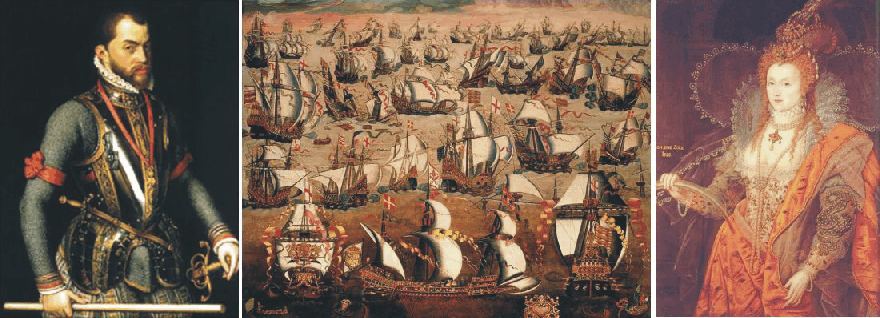
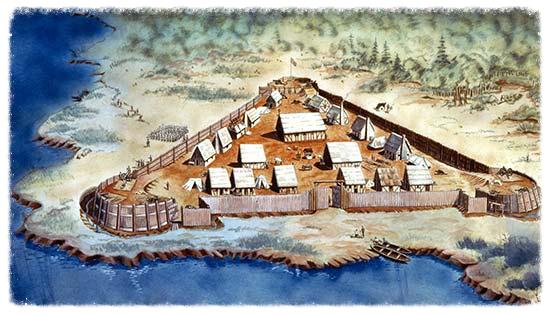
England attempted to establish colonies for many reasons, the two main issues being wealth and religious freedom. Settlers intended to profit by use of joint-stock companies. John Cabot led the first expedition, hoping to discover a sea route that would allow trade with Asia. He did not find anything worth migrating for, so England did not try to colonize the New World until 80 years later. With the Protestant Reformation and economic changes underway, England finally returned to America. England and Spain's increasing rivalry drove England to build outposts in America. Sir Humphrey Gilbert failed at creating a colony in 1578, but his half-brother Raleigh named his colony Virginia, in honor of Queen Elizabeth. King James I sent ships to Virginia, but they ended up settling on the James River, so they named the colony Jamestown. There were many struggles along the way, including hunting, farming, sickness, and famine, but the colony made profit with their new cash crop: tobacco. New England continued to expand with the addition of Maryland, Plymouth, Massachusetts Bay, Rhode Island, New York, New Jersey, Pennsylvania, Delaware, the Carolinas, and Georgia.
2. Explain the English's financing of a colony.


The economics in England had large impacts on the American colonies. The English wool market and joint-stock companies played a big part in funding settlements. After many hard times, the cash crop of tobacco ending up saving Jamestown. The Virginia Company introduced headrights so that settlers who paid for their own voyage would receive land rewards of 50 acres for each member of the family over 15.
3. Summarize how Jamestown was founded and grew.
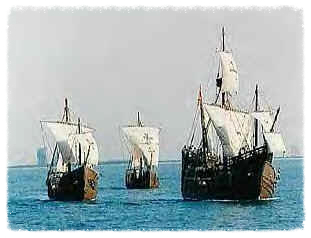
Under King James I, three small ships and 144 men were sent to Virginia in 1606. The 104 men that survived, founded Jamestown on the James River. The Powhatan Confederacy trade helped the colony survive the next few winters. The new development of growing tobacco saved the colony by allowing them to make a tidy profit. The colonists were also granted the right to elect a lawmaking body. Around 1619, enslaved Africans were brought to the colony. Alarmed by the growing amount of colonists, the Native Americans attacked and devastated the colony. Virginia then became a royal colony under a governor chosen by the king.
4. Analyze the conflicts of Jamestown colonists both with natives and among colonists themselves.
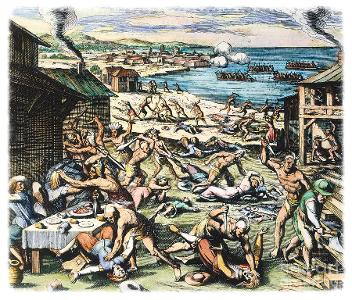
Early troubles included a lack of knowledge on how to fish, hunt, raise livestock, and cultivate crops. Many "gentlemen" refused to participate in manual labor, so this resulted in lawlessness, sicknesses, and starvation. With harsh winters ahead, the settlers began stealing food from natives. As the colony grew, the Native Americans were afraid, so they massacred Jamestown.
Chapter 1 Section 4: Economics, Trade, and Rebellion
1. Explain why pilgrims established Plymouth colony.
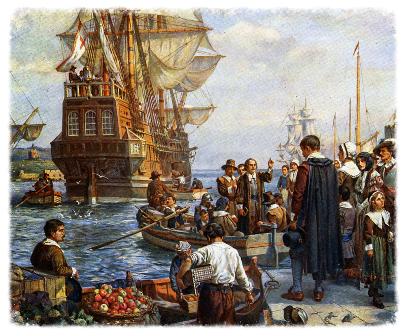
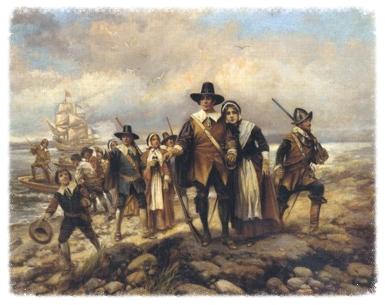
In England, a group of Puritans, called Separatists, later named Pilgrims, decided that the Anglican Church in England had way too many problems, and so to prevent religious persecution, they fled to America on the Mayflower. Instead of arriving in Virginia, the pilgrims landed in the Cape Cod area known as Plymouth.
2. Explain why Puritans set up Massachusetts Bay colony.
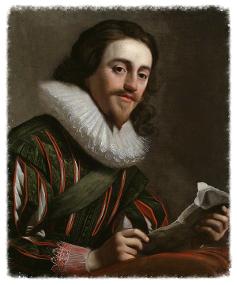
More religious persecution, thanks to Charles I, combined with an economic depression due to the wool industry, led John Winthrop and several other wealthy Puritans to establish the Massachusetts Bay colony.
3. Identify the New England way and evaluate challenges to Puritan leaders.
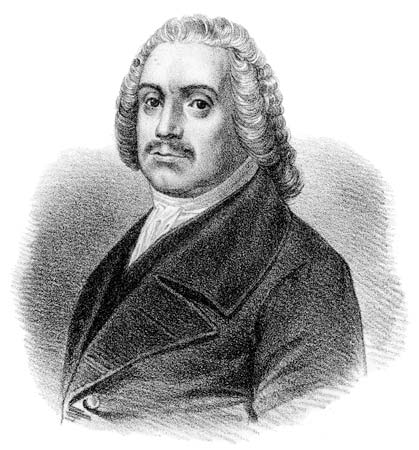
The New England way refers to the ecclesiastical polity, relation to the civil powers, and general practices of the Massachusetts Bay Colony churches and, sometimes, to those of Connecticut or Rhode Island. Puritan leaders' efforts to suppress other religious beliefs led to the founding of other colonies, like Roger Williams' establishingRhode Island.
4. Summarize the causes and effects of King Philip's War and the Salem witchcraft trials.
Cause ↠ Effect
King Philip's War
Fur trade ↠ natives acquired tools like guns from the settlers.
Colonial government demanded natives to follow its laws ↠ natives got angry.
Plymouth executed three Wampanoag men for murder ↠ war was declared.
Colonists killed Metacomet ↠ few natives were left in New England King.
King Philip's War ↠ eventually led to peace between settlers and natives.
Salem Witch Trials
Puritain population grew ↠ religion's power to order society weakened.
Puritan's lack of religious tolerance ↠ hatred for heretics.
Farmers' fear of new merchant life styles and women's insubordination ↠ a string of vicious accusations.
Salem Witch Trials ↠ Ideas of justice changed with the emersion of the newAmerican idea "innocent until proven guilty."
Chapter 1 Section 5: A Diverse Society
1. Compare the founding of the Middle colonies.
New York
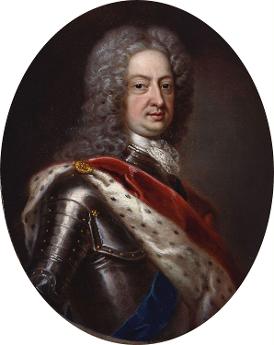
The colony was founded in 1664 by the Duke of York. In 1664, James, the Duke of York, received control of New Netherland. The name of the colony was changed to New York in honor of the Duke. New York became a royal colony in 1685.
Pennsylvania
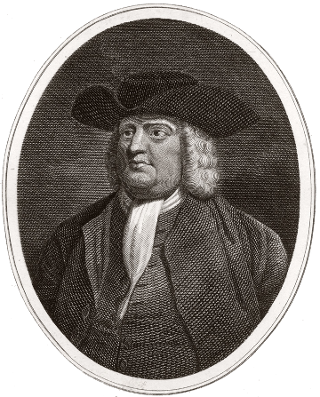
The colony was founded in 1682 by William Penn. William Penn founded Pennsylvania with a land grant that was owed his deceased father. His goal was to create a colony that allowed for freedom of religion due to his desire to protect himself and fellow Quakers from persecution.
New Jersey
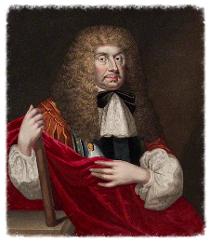
The colony was founded in 1664 by Lord Berkeley and Sir George Carteret. In 1664, James, the Duke of York, received control of New Netherland. He granted land to two of his friends, Lord Berkeley and Sir George Carteret, which would become New Jersey. The two advertised and promised settlers many benefits for colonizing including representative government and freedom of religion. The colony quickly grew. New Jersey became a royal colony in 1702.
Delaware
The Colony was founded in 1638 by Peter Minuit and the New Sweden Company. Peter Minuit was Dutch and formed New Sweden as part of New Netherland. When Charles II, King of England gave his brother James, the Duke of York, New Netherland, he demanded and received its surrender. He renamed New Sweden to Delaware.
2. Trace the growth of the Middle colonies.
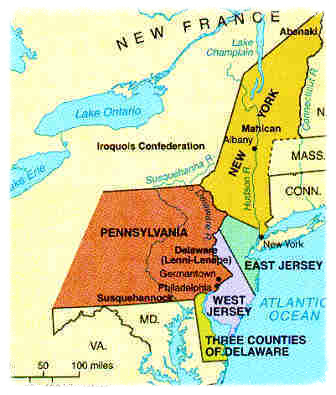
Advantaged by their central location, the middle colonies served as important distribution centers in the English mercantile system. New York and Philadelphia grew at a fantastic rate. These cities gave rise to brilliant thinkers such as Benjamin Franklin, who earned respect on both sides of the Atlantic. In many ways, the middle colonies served as the crossroads of ideas during the colonial period. Also, since America prides itself on diversity, nowhere was it more evident than in the middle colonies.
3. Explain how economics influenced the development of the Southern colonies.
In the South, life was very different economically than the lives of small farmers in the North. Crops like tobacco and indigo brought in significant profits. Many came to the South to prosper, but few succeeded in becoming wealthy. As a result the south had very distinct social classes. In addition, the wealthy plantation owners enjoyed political power and influence.

4. Identify the unique reasons for the founding of Georgia and Maryland.
Both Georgia and Maryland were founded as refuge for specific groups of colonists. Georgia was a colony where the English poor could start over. It was founded by James Oglethorpe. Many of the colonists had been imprisoned because they were in debt. Lord Baltimore established Maryland in 1634 as a refuge for Catholics.
DBQ's
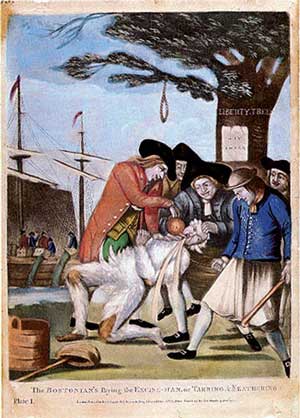
1. In the first painting, The Bostonians Paying the Excise-man, or tarring and feathering from 1774, a group of Sons of Liberty, can be seen tarring and feathering a British customs officer. From a British point of view, the Americans are depicted as savage, cruel, and disrespectful.
2. In sources 2 and 3, two different arguments are made. In the first essay, the one from the Pennsylvania Gazette, John Dickinson claims that Britain should not be able to legally "take money out of our pockets, without our consent" because they are a "dependent state." Samuel Johnson, in this excerpt from the Patriot, affirms the belief that because America receives the benefit of Great Britain's protection, they are "subject[ed]... to government."
3. Source 4, the letter from 1770, describes the scene as the angry mob provoking the soldiers, complete with "throwing bricks, stones, pieces of ice, and snowballs" and "opprobrious language." It says that Captain Preston tried to get them to "retire peaceably," but the crowd refused, and they were forced to resort to violence. However, in the newspaper article, the roles are reversed, with Captain Preston and his men starting the brutal feud, "charg[ing] with bayonets" and "push[ing] and driv[ing] the people off."
4. In the source 5 engraving, The Bloody Massacre by Paul Revere, both sides are shown equally. This is the closest we may ever get to a photograph of the actual scene. Its accuracy, however, may be a bit bias considering that Paul Revere was a revolutionist and the revolutionist side of the portrait looks unarmed and defenseless. Even so, I think one needs all three supplements sources 4, 5, and 6 to get a full picture of what really happened because they all seem partial in their own ways.
★ Chapter 2 ★
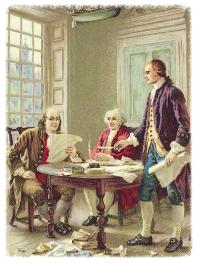
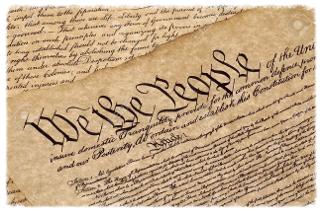
The Declaration of Independence Poem
by Katelyn Garcia
Revolutionary, essential, long-lasting, distinguishing, transcendent
This affects all governed people who now hold the ability to govern themselves
Residents of the United States, Great Britain, and the rest of the world
Relates to the time period under which America lay under offensive rule
These people lived with cut-off trade, unfair trial, and taxation without representation
People searched for hope, happiness, freedom, and justice
This document taught the generations that follow to stand up for their basic rights
And is remembered for its fresh ideas of God-given liberties
Felt like a sacrifice must be made, our Founding Fathers paved the way
Most important historical significance was the creation of a strongfoundation for a future nation.
Primary Source
Why did Britain loose the Revolutionary War?
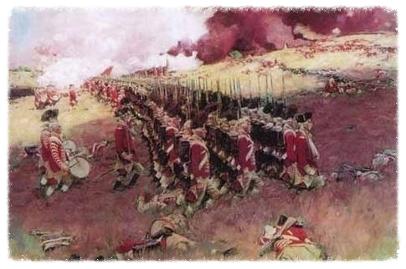
2. More advantages of the Americans included fighting at home (familiar with surroundings), good leadership by generals, motivation for rights and freedom, funding and support from France, and time. (the longer the war dragged on, the British became tired and more likely to give up.)
1. New approaches to fighting gave America certain advantages. America introduced the tactic of guerrilla warfare, meaning that they did not always fight lined up. Instead, they hid behind trees and walls and ambushed the British and took their supplies. In contrast, the tight formation used by British troops made them easy targets.
★ Chapter 4 ★
Precedents and Customs of the First President
Addressing the President
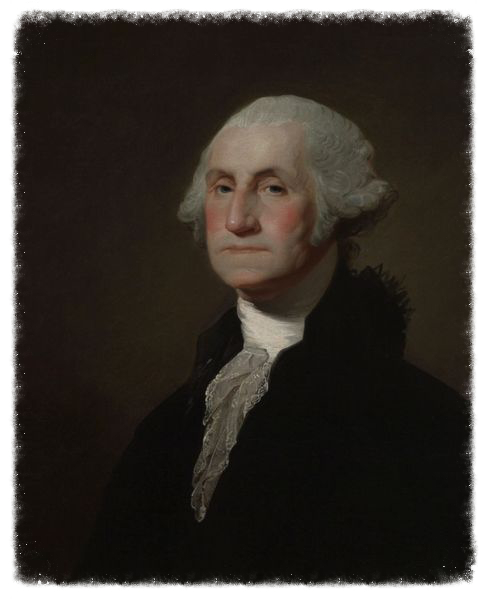
During the Revolutionary War, George Washington was referred to as "Your Excellency" or simply "General." Since no other nation had ever elected a president, the title for the first president was still up for discussion. After many pompous suggestions, like "Your Highness," or "Your Majesty," members finally adopted the modest yet respectful name of “Mr. President,” setting the standard for future Presidents. (Only the current president is addressed this way, however.)
The Judiciary Act of 1789
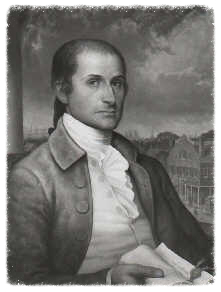
To deal effectively with challenges facing the new nation, Congress established the federal judiciary. The Judiciary Act of 1789 created 13 district courts, three courts of appeal, and the Supreme Court. With the Senate's consent, Washington chose the federal judges and selected John Jay as the first chief justice of the United States.
The Whiskey Rebellion
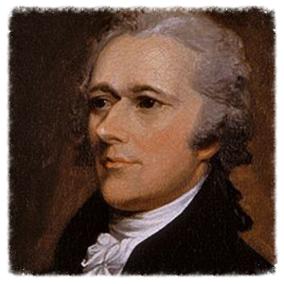
According to Hamilton, the government had the right to directly tax, and tax was imposed on whiskey, which enraged Western farmers whose grain was distilled into whiskey before shipping it to market. Western Pennsylvania farmers terrorized tax collectors, stopped court proceedings, and robbed the mail. Because they were so out of control, Washington sent 15,000 troops to effectively crush the rebellion, much to the dismay and shock of citizens. Having been a general, he was willing to use military force to keep his people in line.
Treaty of Greenville
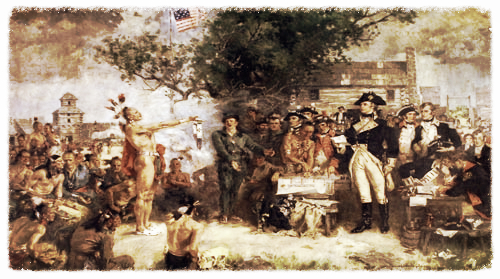
To stop Native American attacks in the Northwest Territory, Washington sent General Anthony Wayne and his troops. After the victory, the treaty of Greenville was signed in August of 1795. The natives agreed to give up part of southern Ohio and Indiana in exchange for a yearly payment of $10,000 from the federal government. The flow of settlers rapidly increased, and by 1803, Ohio had enough people to become a state.
Vice President's Job Description
The only duty the U.S. Constitution assigns the Vice President is to act as presiding officer of the Senate. But the Vice President also serves as ceremonial assistant to the President and is an important part of the President's administration. He or she must be ready to become President or Acting President if anything happens to the President.
The Cabinet
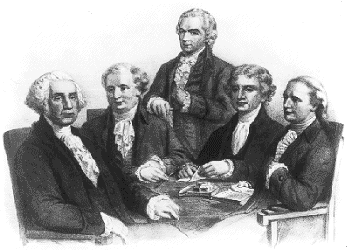
To get the government up and running, the president needed a bureaucracy to handle different responsibilities. Washington wanted people who were "disposed to measure matters on a Continental Scale" instead of just thinking of their own states, so he chose Thomas Jefferson as secretary of state, Alexander Hamilton as secretary of the treasury, Henry Knox as secretary of war, and Edmund Randolph as attorney general. These department heads served as advisers to the President, and later became known as the cabinet, an arrangement of leaders still in use today.
hamilton's economic plan
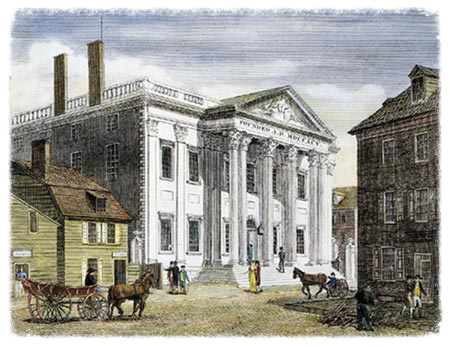
Finding a source of revenue became the next pressing task. The government needed money to operate. James Madison's idea was to raise the taxes on imports. Hamilton supported the Tariff of 1789, but he believed the government should also be able to borrow money. If the U.S. accepted debts from the Revolutionary War at full value, people who owned bonds could lend money in the future. Hamilton set up public credit and asked Congress to build a national bank to manage debts and interest payments. Also, providing a national currency, he argued, would promote trade, encourage investment, stimulate economic growth, and provide for defense. Thus,Washington passed the bill and the Bank of the United States of America was formed in 1791.

Farewell Address &Foreign Affairs
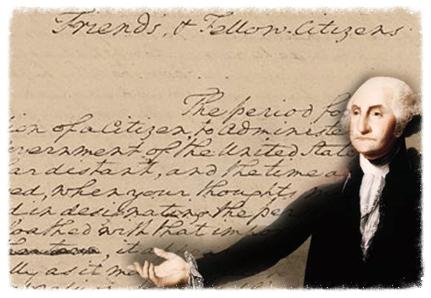
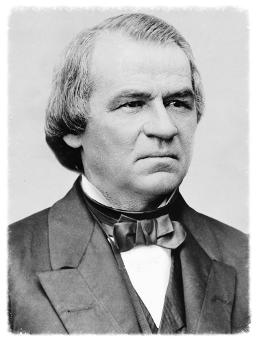
In his farewell Presidential address, George Washington advised American citizens to view themselves as a cohesive unit, avoid political parties, and warned them to be wary of attachments and entanglements with other nations. Washington urged Americans to avoid excessive political party spirit and geographical distinctions. In foreign affairs, he warned against long-term alliances with other nations. Andrew Johnson, who would later serve as President after Lincoln’s assassination, first read Washington’s address in front of the Senate during the Civil War in 1862, in an attempt to go back to Washington’s values and to commemorate the 130th anniversary of his birth. Since 1896, the Senate has observed this tradition every year. Farewell Addresses are an opportunity for all presidents to discuss their regrets and the direction that the country should head in next.
Terms of Office
Washington, wary of the dangers posed by an individual's becoming entrenched in the presidency, created a "two-term tradition" that remained intact until Franklin Delano Roosevelt's third consecutive election in 1940.
★ Chapter 5 ★
Outline
Chapter 5 Section 1: American Nationalism
Objective Question: How did economic and judicial nationalism help strengthen the nation?
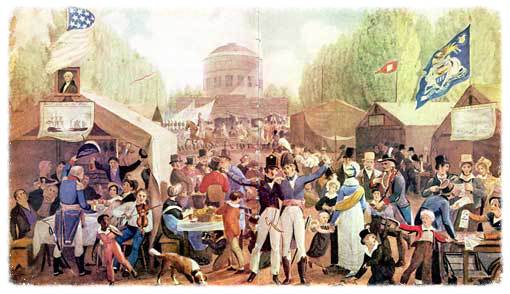
Economic Nationalism
National pride swept the nation after the War of 1812. The period of James Monroe's presidency became known as the "Era of New Feelings." American leaders decide to unify the nation even more by creating a new national bank, protecting from foreign manufacturer competition, and constructing canals and roads to improve transportation. After the war, the Federalists began to lose influence and by 1820, only Republican presidential candidates remained. Republicans did not like the idea of a national bank, but the results were catastrophic. Prices began to rise at a rapid rate. The government had been borrowing money to finance the war, so they had to pay interest. John C. Calhoun, with the support of Henry Clay and Daniel Webster, proposed a bill for the Second Bank, which passed in 1816. Protective tariffs were also passed in order to protect American manufactures by taxing imports to drive up their prices. Private businesses, state government, and local governments funded new transportation as well.
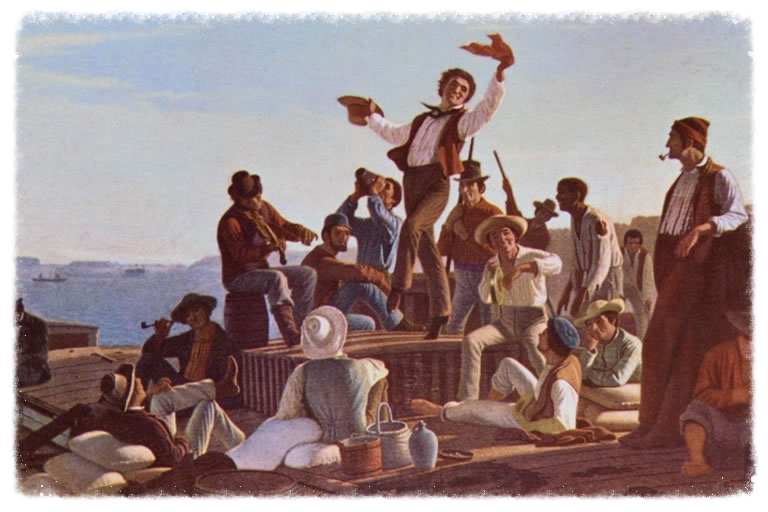
Judicial Nationalism
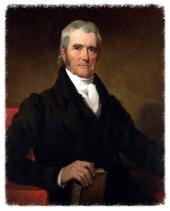
The Supreme court's rulings, under the philosophy of Chief Justice John Marshall, between 1816-1824 displayed the dominance of nation over state. Some of these cases included Martin v. Hunter's Lessee, McCulloch v. Maryland, and Gibbons v. Ogden.
Case Presentation: Martin v. Hunter's Lessee
Brief Explanation:
Denny Martin, a British subject, tried to sell land in Virginia which was inherited to him by his uncle Lord Fairfax, a British Loyalist during the war, but was unable to due to Virginia Law.
Issues before Court:
✧ Virginia Law stated the no "enemy" could inherit land.
✧ The supreme court upheld Martin's case because Virginia law violated Jay's treaty, which stated that land that belonged to Loyalists before the war was still theirs.
Impact of the Decision:
✧ Affirmed that the Supreme Court has the authority to review state court decisions
✧ Helped establish the Supreme Court as the nation's court of final appeal.
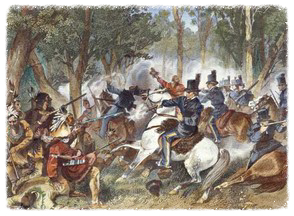
National Diplomacy
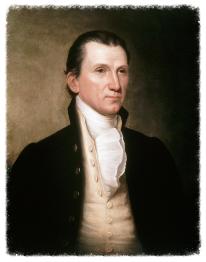
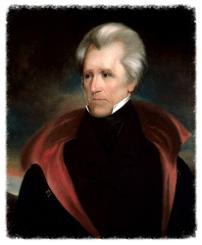
Under the leadership of James Monroe, America begins to expand its boarders and assert itself internationally. The "seminoles," or runaways, consisted of escaped slaves and Native Americans who lived in Florida, which was Spanish territory at the time. They started raids against each other, and warned America not to get involved. The present secretary of war, John C. Calhoun, ordered U.S. troops under General Andrew Jackson to step in. Jackson infuriates the Spanish by disobeying orders, seizing settlements, and removing the governor of Florida from power. Florida eventually becomes part of the U.S. in the Adams-Onís Treaty of 1819.
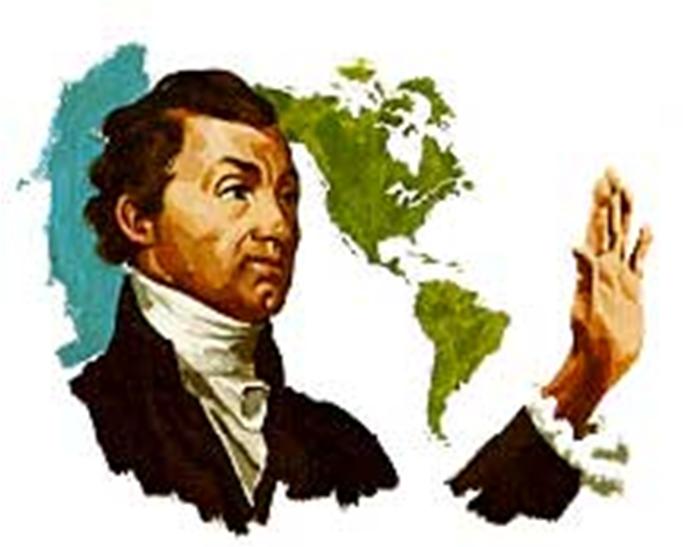
Great Britain and the U.S. made a lot of money trading with Latin America, so they were going to issue a joint statement supporting the independence of Cuba, Puerto Rico, and Santo Domingo. Russia's growing presence was also a threat to the American government. Adams and Monroe ultimately decided not to team up with the British when dealing with Spain and Russia. The Monroe Doctrine, the president's proclamation, started a long-term American effort of preventing Europe from interfering with Latin American political affairs. It upheld Washington's original policy of not getting involved in European power struggles.
Chapter 5 Section 2: Early Industry
Objective Question: How did transportation and industrialization affect American society?
A Revolution in Transportation
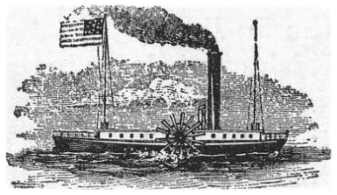
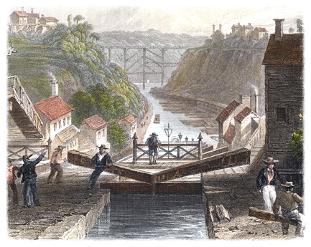
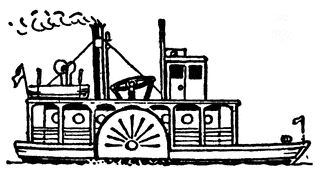
A new engineering project begins in New York. The Erie Canal connects the Hudson River at Albany to Lake Eerie in Buffalo, and it was a striking example of a revolution in transportation. In 1806, Congress starts funding a major east west highway, the National Road, that goes from Cumberland to Wheeling. Since rivers offered a far faster, more efficient, and cheaper way of transportation, Robert Fulton invented the steamboat in 1807 that made river travel more reliable and upstream travel easier.
A New System of Production
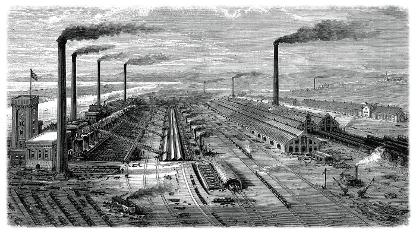
The Industrial Revolution began in Great Britain in the mid- 1700s and consisted of several basic developments including complex machinery, factories' becoming more prevalent, and manufactures' ability to sell goods nationwide. Because of the free enterprise system, based on private property rights, Individuals could acquire capital with minimal government regulation. Entrepreneur Francis C. Lowell introduced mass production of cotton cloth to the U.S and his industrial factory techniques applied to other products like lumber, shoes, leather, and wagons. The concept of interchangeable parts was popularized by Eli Whitney (creator of the cotton gin), and machines were able to produce large amounts of identical pieces that workers assembled into finished weapons. Communications also improved with the invention of the telegraph and morse code by Samuel F. B. Morse. Because working conditions needed improvement, workers formed labor unions, but they had little power and money to support strikes (work stop pages). President Martin Van Buren did show his gratitude by reducing the workday to ten hours.
Life in the North
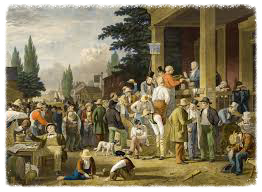
The labor of northern farmers helped feed the population and nourished the region's economy.
p. 201 (1-6)
1. See all pink words in the outline.
2. The building of canals and railroads boosted the U.S. economy by improving transportation, unifying the nation, expanding to national markets, and increasing trade.
3. The rise of industrialization and the growth of cities were factors that contributed to the development of industry in the North.
4. The leading economic activity in the U.S. in the early 1800s was agriculture.
5. Interchangeable parts revolutionized the manufacturing process by producing large quantities of identical pieces that workers later assembled into finished weapons.
6. Technological Advances ↠ Effects
Steamboat ↠ made river travel more reliable and upstream travel easier.
Railroad ↠ expanded trade, created national markets, made transportation cheaper.
Chapter 5 Section 3: The Land of Cotton
Objective Question: What role did the cotton gin play in the Southern Economy?
The Southern Economy
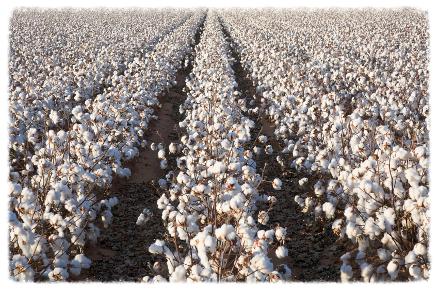
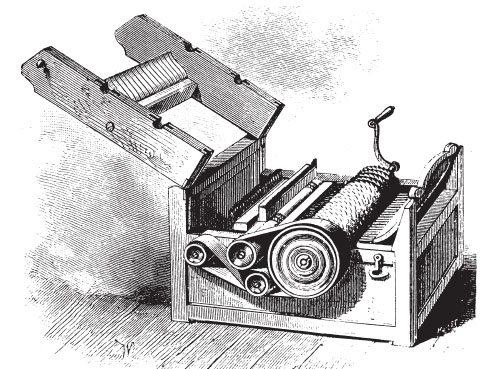
Tobacco was the major cash crop of the upper Southern states of Maryland, Virginia, Tenesse, and Kentucky. South Carolina and Georgia grew rice paddies, and Louisiana and Texas grew sugarcane. However, cotton dominated the Southern area. In order to quickly and efficiently comb the seeds out of the cotton balls, Eli Whitney invented the cotton gin in 1793. After the cotton industry's shocking popularity, Southerners declared "Cotton was King." Southerners were getting rich, but more labor was needed, strengthening the institution of slavery. The South was not as industrially advanced as the North. Except for some textile mills, iron, salt, coal, and copper mines, the south relied more on agriculture and imported goods.
Society in the South
The planter elite was the first class, and they made up a small percentage of the population, but they controlled the region's economy. The rest of the white population included the yeomen farmers (ordinary farmers), the rural poor, and other professionals such as doctors, merchants, and lawyers. The bottom class were the African Americans, 93 percent of whom were enslaved.
Slavery
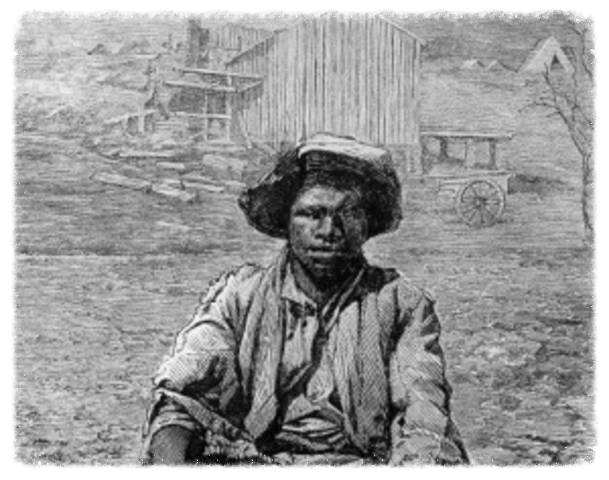
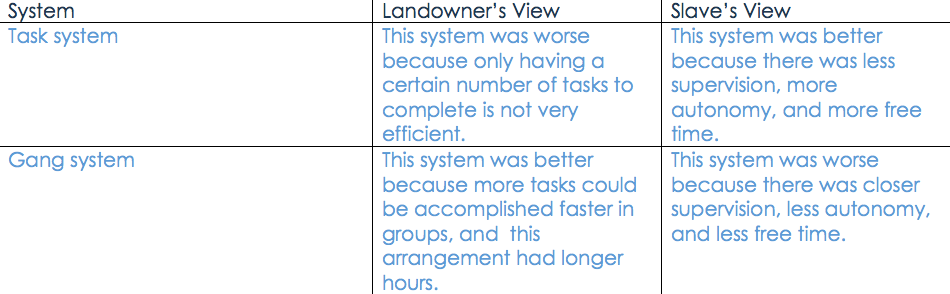
Enslaved African Americans who worked the fields were organized into two basic labor systems. The task system (used on small plantations) gave workers a specific set of jobs to accomplish everyday. When the work was finished, they could do whatever they chose to do with the rest of the day. The gang system (used on larger plantations) required workers to work all day in groups. Under whichever method, the concept of slavery was degrading. Former slave, Frederick Douglas rose up to become a prominent leader in the antislavery movement. Enslaved women and children also had great responsibilities in the home. There were some free African Americans, but they were not accepted into white society. Religious songs played a key role in African American culture. Some people like Gabriel Prosser or Nat Turner organized rebellions to oppose slavery by causing ruckuses and killing white people.
Chapter 5 Section 4: Growing Sectionalism
Objective Question: How did the Missouri Compromise and Elections of 1824 and 1828 divide the nation?
The Missouri Compromise
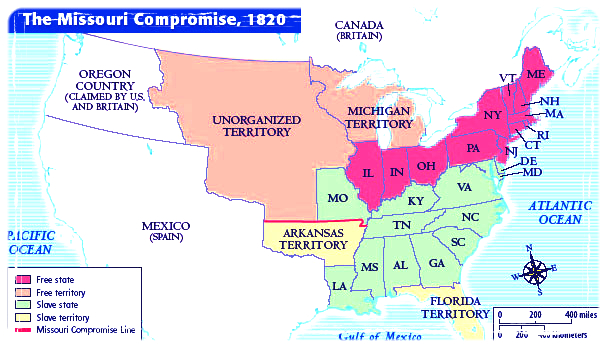
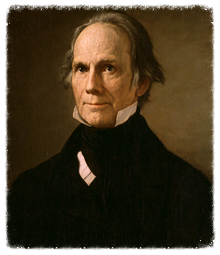
The Missouri Compromise tried to resolve, at least temporarily, the growing disagreement between Northern and Southern states over the issue of slavery. Maine, which had been part of Massachusetts, entered the Union as a free state and Missouri became a slave state, which provided balance in the Senate. Henry Clay of Kentucky managed the House of Representatives to vote in favor of the compromise.
The Elections of 1824 and 1828
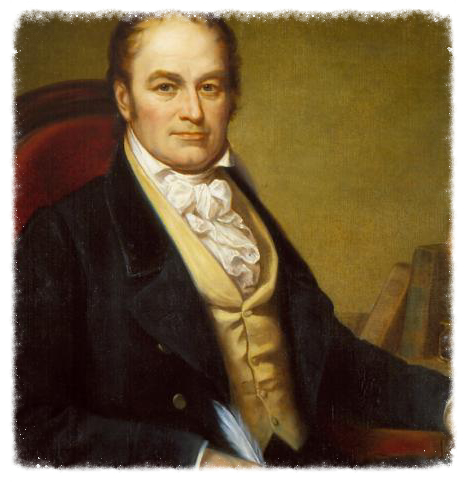
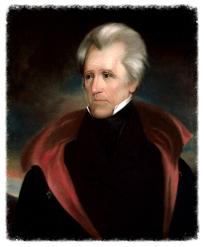
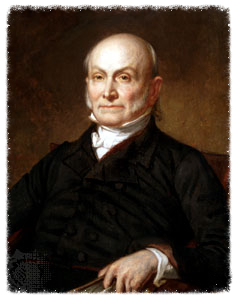
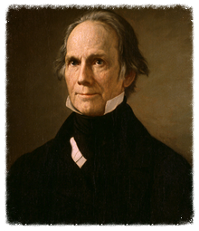
The four candidates for president in 1824 were considered "favorite sons" (men who enjoyed the support of leaders from their own state and region) Henry Clay and Andrew Jackson represented the West, while John Quincy Adams represented New England, and William Crawford represented the South. Crawford followed Jefferson's lead of sates' rights and strict interpretations of the Constitution, and Clay favored the American System which includes the national bank, the protective tariff, and nationwide improvements. Jackson, however did not take stands on any particular issues, but he won the most popular votes. After Clay threw his support behind Adams, Jackson's supporters accused them of striking a "corrupt bargain." After Adams' win, Jackson's supporters formed the democratic party, and Clay's supporters called themselves the National Republicans. In the election of 1828, John Quincy Adams and Andrew Jackson engaged in mudslinging, attacking each other personally, and "Old Hickory" won the presidency.
p. 215 (1-6)
1. See all pink words in the outline.
2. The Missouri Compromise maintained the balance of power in the Senate by requesting admission into the Union as a slave state, while Maine entered as a free state.
3. The House of Representatives via the 12th amendment had to vote from the top three candidates. Clay was the fourth place candidate and his votes went to Adams. These events helped John Quincy Adams win the presidency in 1824.
4. The Democratic Party was formed after the election of 1824 when no one won in the electoral votes and Adams became president after a vote from the House of Representatives.
5. Terms of the Missouri Compromise:
- It admitted Maine as a free state.
- It admitted Missouri as a slave state.
- It established a line that slavery was to be excluded from the Louisiana Purchase lands.
6. The Missouri Compromise was only a temporary measure because the slavery crisis was still growing.
